What causes it
Incomplete combustion, usually from an appliance that is faulty, badly fitted, poorly ventilated or has a blocked flue. It is why the flue and ventilation checks in a safety inspection matter as much as the appliance itself.
Gas safety
CP12 certificates for landlords, annual servicing for homeowners, and a straight explanation of anything that fails. Carried out by a Gas Safe registered engineer.
Do not use this website, a light switch, a doorbell or a mobile phone indoors. Open the doors and windows, turn the gas off at the meter if you can reach it safely, get everyone outside, and ring the National Gas Emergency Service on 0800 111 999 — free, 24 hours a day.
Ring them first. Ring us second, on 0113 490 0490, and we will pick up the repair once the supply has been made safe.
Landlords
If you let a property with gas in it, this is not optional and the responsibility sits with you rather than the tenant.
Servicing
People often buy one thinking they are getting the other. Worth knowing the difference before you book.
Carbon monoxide
Incomplete combustion, usually from an appliance that is faulty, badly fitted, poorly ventilated or has a blocked flue. It is why the flue and ventilation checks in a safety inspection matter as much as the appliance itself.
Lazy yellow or orange flames instead of crisp blue, sooty marks around an appliance, a pilot light that keeps blowing out, and heavy condensation in the room. None of these are conclusive on their own and all of them are worth a phone call.
Headaches, dizziness, nausea, breathlessness and tiredness that get better when you leave the house and come back when you return. If several people or pets in the household are affected, get out, get fresh air and seek medical advice as well as ringing 0800 111 999.
Tell us the date when you ring and we will work to it.
FAQs
Landlords. If you rent a property out, every gas appliance and flue must be checked by a Gas Safe registered engineer every 12 months and a record issued. You must give the tenant a copy within 28 days, and give new tenants one at the start of the tenancy. Homeowners are not legally required to have one.
That each appliance is burning correctly and is the right size for the space, that the flue is clearing products of combustion properly, that ventilation is adequate, that safety devices work, and that there is no gas escaping anywhere on the installation. It is a safety check, not a service — they are different jobs, though we can do both in one visit.
Typically around half an hour to an hour for a single boiler, longer where there is a fire or a cooker as well. The certificate is issued on the day and emailed over.
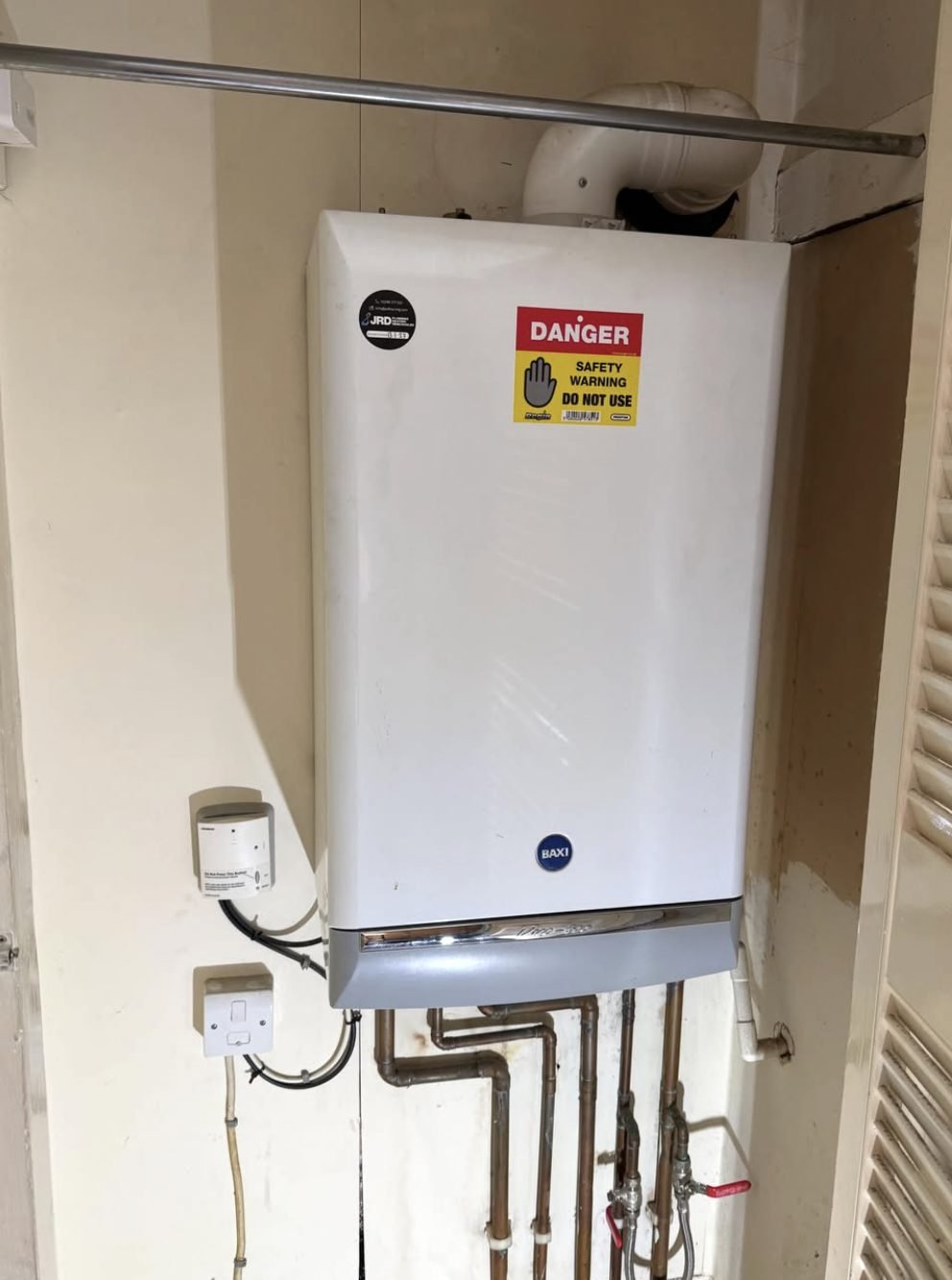
It gets classified according to how dangerous it is, and anything Immediately Dangerous or At Risk is turned off with your permission and labelled. That is what the warning notice in our gallery photo is. We will explain exactly what was found, what it means and what it takes to put right.
Yes. Tell us the access arrangement when you book — tenant at home, keys with an agent, or a specific window — and we will work to it. Getting refused access is a common headache and we are used to working around it.
Not legally, but buyers and their solicitors increasingly ask, and a recent certificate plus a service record removes an awkward question from the conveyancing.
A safety check confirms the appliance is safe right now. A service includes that, plus stripping and cleaning the appliance to keep it running efficiently and to keep the manufacturer warranty valid. Most landlords are best having both done together.
Book it in
Tell us the property, how many appliances and when access works. Certificate carried out by a Gas Safe registered engineer and emailed over the same day.
Or just ring
0113 490 0490Managing several properties? Tell us and we will sort the dates together.